Long before index funds and trading apps, there was real estate. It's one of the oldest ways to build wealth, and for good reason: people always need a place to live.
Today, you don't need a down payment, a toolbox, or a property manager on speed dial to get involved. Here are five reasons investors keep coming back to real estate, and how Arrived makes each one easier to reach.

Two ways to earn
Most investments give you one way to earn. Real estate gives you two:
- Rental income, paid out while you hold the investment
- Appreciation, if the property grows in value over time
That combination is what makes real estate distinctive. Your money can earn income now and still have room to grow.
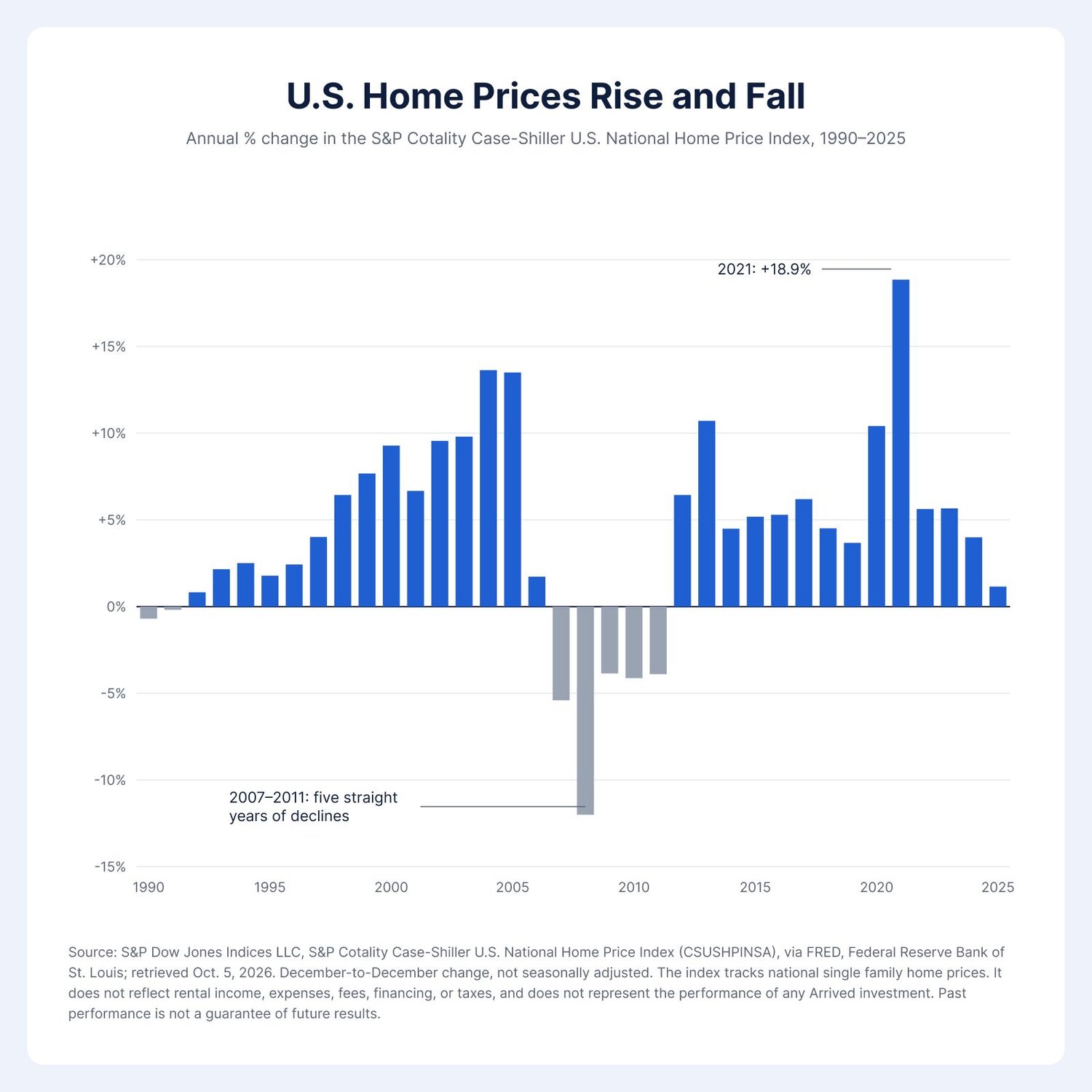
The long-term trend has been on investors' side. National home prices have risen in 29 of the last 36 years, and even the sharpest downturn in modern history, from 2007 to 2011, gave way to a strong recovery, with prices up more than 10% in 2013 alone.¹ Real estate rewards investors who think in years, not days.
Income that shows up monthly
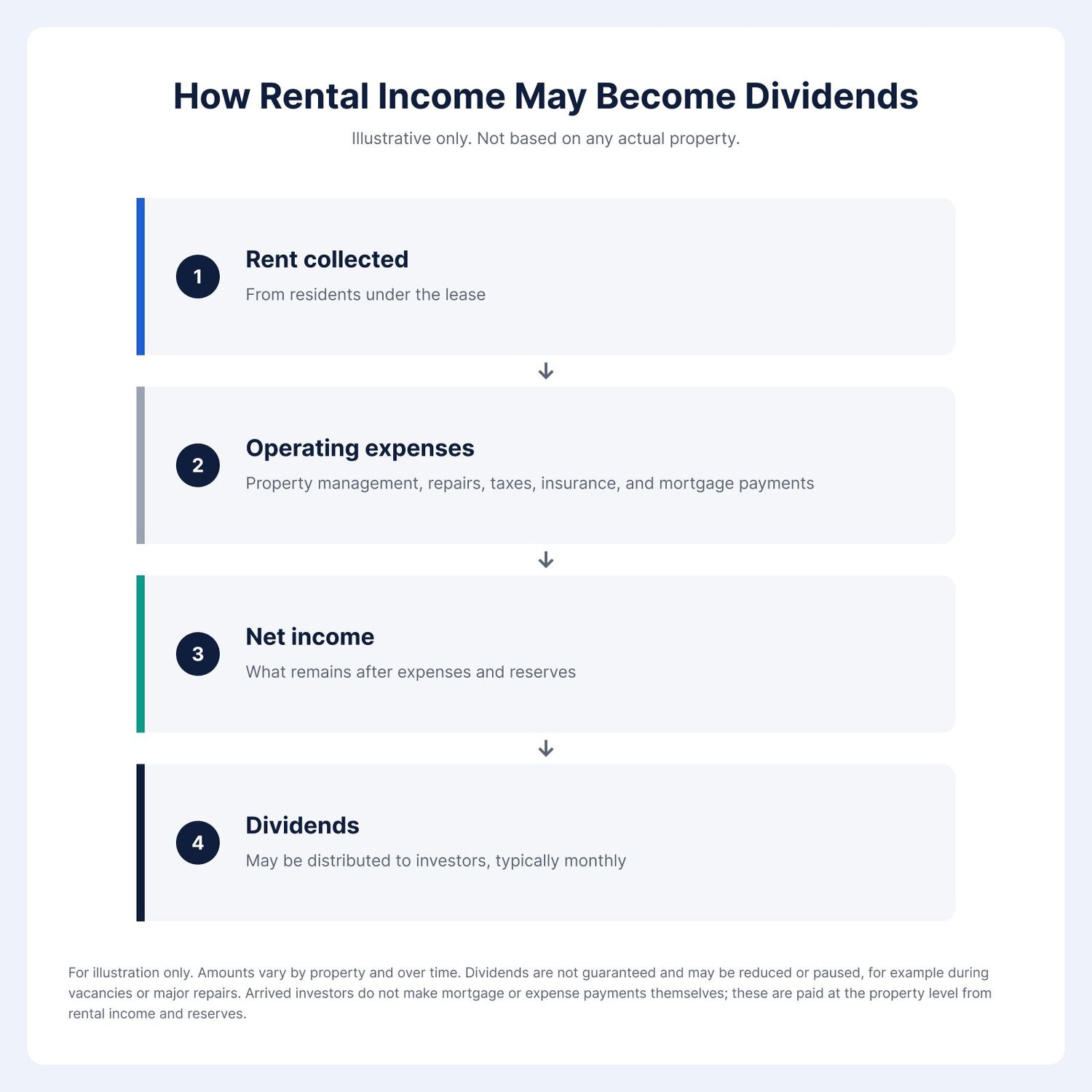
Rent comes due on the first of the month. That's the engine behind real estate income.
Residents pay rent, operating costs are covered, and the remaining income can be distributed to investors as dividends. On Arrived, rental property dividends are typically paid monthly, deposited straight to your account.
The best part is everything you don't do. No collecting rent, no midnight maintenance calls, no screening residents. Arrived and its property management partners handle the work, and you get the investor's side of the experience.
Diversification beyond the stock market
Real estate runs on different drivers than stocks and bonds: local job growth, housing supply, and the steady demand for a place to call home. That's why many investors add real estate as a complement to the rest of their portfolio.
Arrived lets you diversify within real estate, too. Build a portfolio your way:
Individual properties: hand-pick rental homes in the markets you believe in.
Single Family Residential Fund: a portfolio of rental homes in multiple markets across the country in one investment.
Seattle City Fund: focused exposure on rental homes in one of the country's most dynamic cities.
Real Estate Income Fund: earn interest from short-term loans secured by residential real estate.
Mix and match to build exposure across homes, markets, and strategies.

A historical edge against inflation
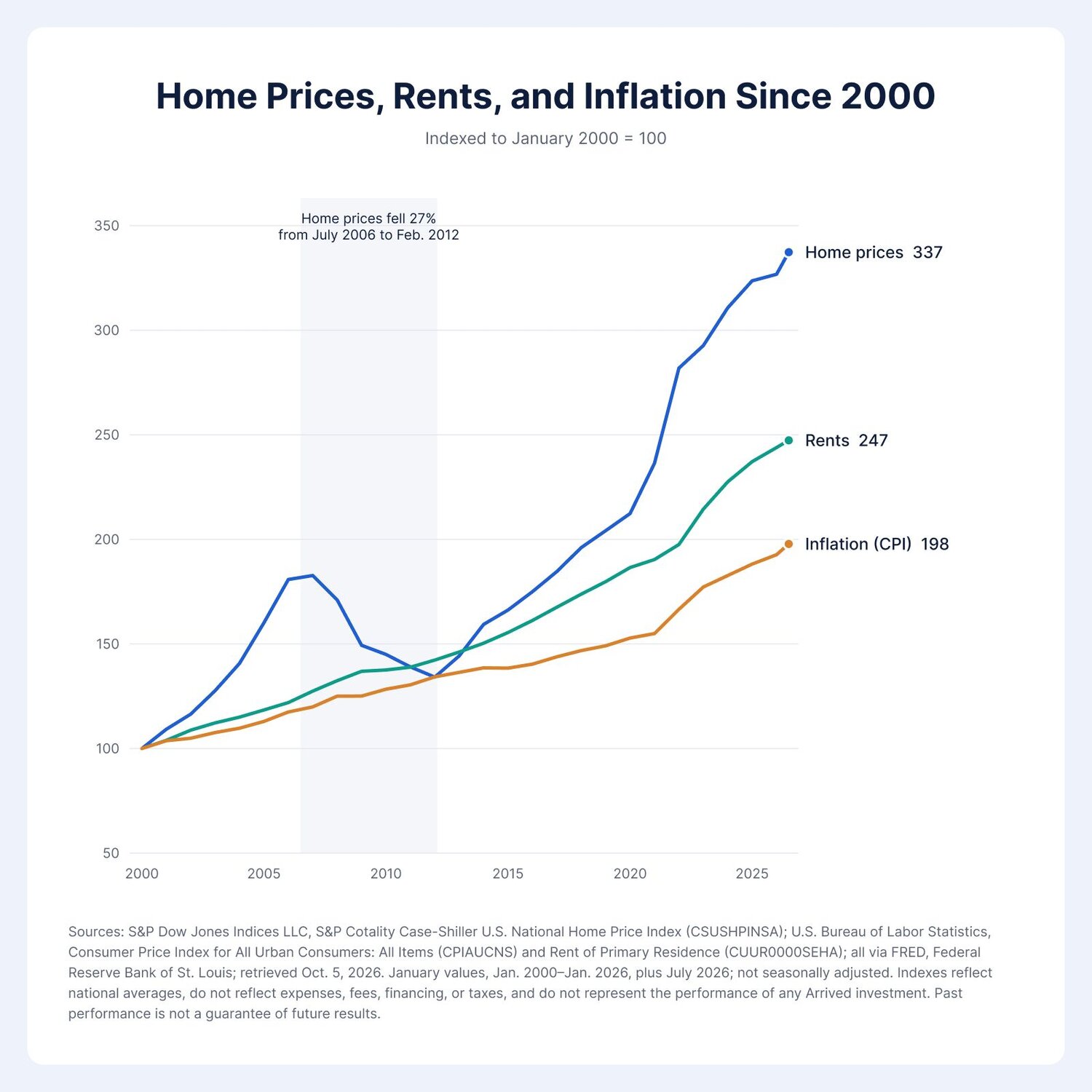
When everyday prices climb, your savings buy less. Real estate has a long track record of keeping up, and then some.
Since January 2000, national home prices have risen about 237%¹ and rents about 147%³, while overall consumer prices rose about 98%.² Over a quarter century, homes and rents grew more than twice as fast as everyday prices.
Why does real estate tend to hold up when prices rise?
- Rents reset. Leases renew every year or two, so rents can adjust as the cost of living rises.
- Building costs more. Rising material and labor costs make new homes more expensive, which supports the value of existing ones.
- Fixed-rate debt stays fixed. Mortgage payments on fixed-rate loans don't rise with inflation, even when rents do.
Tax advantages built in
Real estate offers some of the most investor-friendly tax treatment, and Arrived structures its investments to take advantage of it.
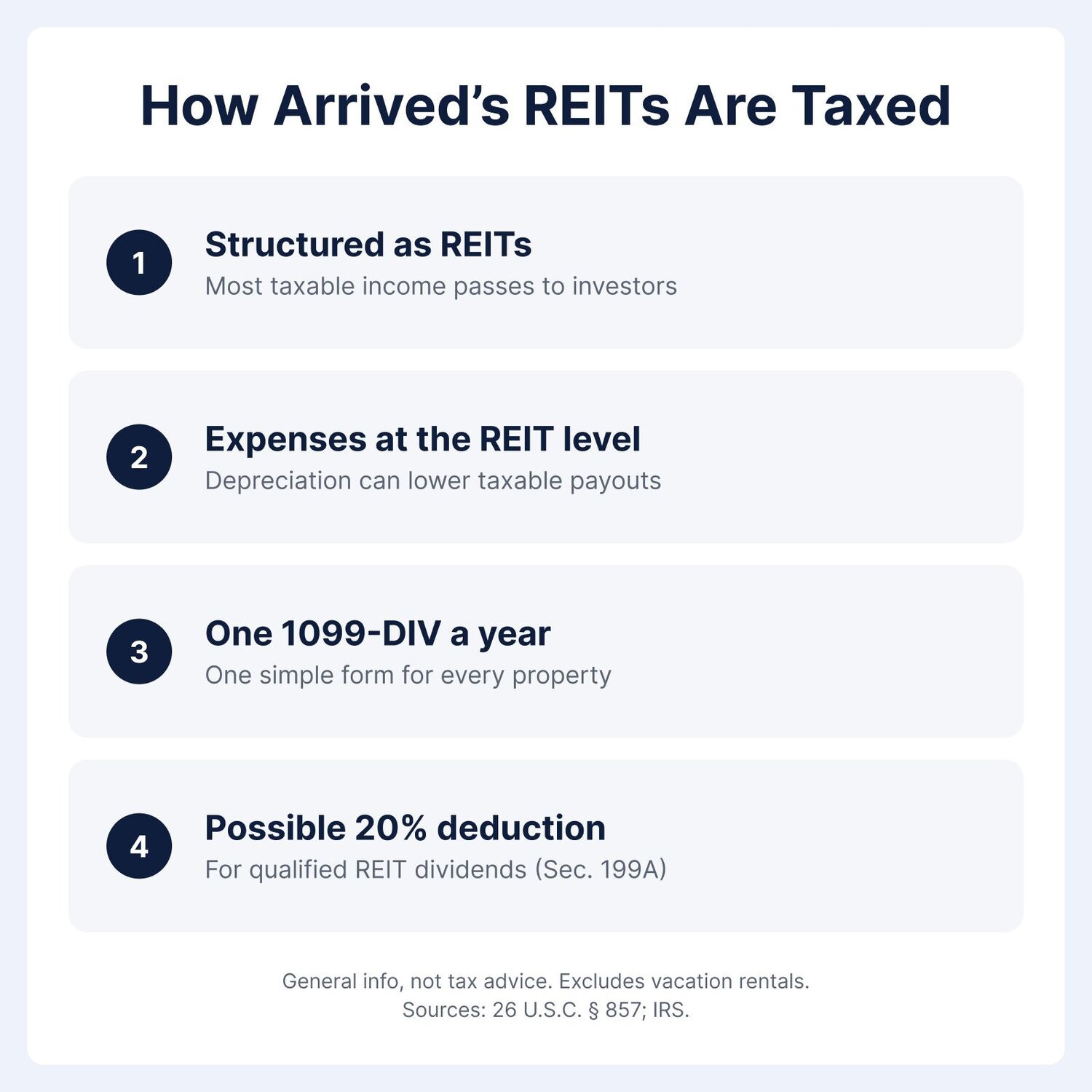
Arrived's single-family residential properties, the Single Family Residential Fund and the Real Estate Income Fund, are structured as real estate investment trusts (REITs).
What that means for you:
- No corporate-level tax drag. REITs generally avoid corporate income tax by distributing at least 90% of taxable income to investors.⁴
- Depreciation works in your favor. For property REITs, depreciation, mortgage interest, and property taxes reduce REIT-level taxable income, which can lower the taxable portion of your distributions.
- A potential 20% deduction. Qualified REIT dividends may be eligible for the Section 199A deduction.⁵
- One simple tax form. You get a single 1099-DIV each year, not a stack of paperwork for every property.
The information provided here is for general informational purposes and should not be construed as tax advice.

FAQ
Who Can Invest?
How much can I invest?
What type of products are available on Arrived?
Will I have any responsibilities for managing properties I invest in? If not, who is responsible?
What type of returns can I obtain?